 Business Plan
On a Mission to Expand Access-to-Justice with AI-Enabled Lawyers
30.6M Americans go to court each year without a lawyer — and it impacts Americans in all walks of life. Lawma is an AI-native solution that creates a marketplace of real attorneys, that offer unbundled rates at a price an average household can absorb. This business plan outlines a real addressable market and a solution designed to meet the challenge.
- AI, trained by lawyers, does the grunt work.
- Lawma matches clients to attorneys first — the attorney-client relationship unlocks meaningful AI-powered coaching.
- Lawyers offer a pre-negotiated flat fee for unbundled services ($200–$3,500; ~$870 avg). Permanent free tier for legal-aid-eligible litigants.
- Privileged data on a bank's security posture: two-party walls, RLS firm isolation, ZDR LLM, full audit log.
Annual U.S. TAM · 16 legal categories
Y5 Floor Revenue · 5 streams
Y5 EBITDA Margin · marketplace economics
Y5 Capture · 87% Headroom
Purpose · Slide 1
Serving the priced-out majority is the business; serving those who can't pay is the mission — and both run on the same engine.
Lawma is an attorney-supervised, AI-native legal platform. The mission and the market are one product. Representation is priced out of reach across the income spectrum — not merely for the poor: 2 in 3 Americans live paycheck to paycheck , including 40% of those earning over $100K. We serve the missing middle — too much for legal aid, too little for a full retainer — as the commercial business, and we will serve legal-aid-eligible litigants on a permanent free tier as part of the same mission. Secure architecture, supervised engagement, and world-class solutions that make the next case better.
Every household
The priced-out majority
The missing middle — too much for legal aid, too little for a full retainer. They can pay unbundled per-task fees of $200–$3,500 (avg ~$870). This is the commercial engine that funds the mission.
Giving back
Legal-aid-eligible litigants
Permanent free tier for litigants who qualify for legal aid. Same supervised AI, same real lawyer, same engagement — routed via legal-aid partner referrals. Both directions, by design.
The free tier is not simply a charity bolted on
Problem · Slide 2
Two barriers. Two locks. Both open at once — and only for the company that gets the order right.
The 30.6M Americans that go to court alone every year do it not because they want to, but because the math doesn't work. A full retainer prices them out (Gate 1: Cost), and the case requires procedural competence they don't have (Gate 2: Capabilities). Every prior attempt picked one lock and ignored the other.
75%+
SRL prevalence · civil
92%
LSC justice gap (inadequately served)
~23M/yr
NCSC civil + dom-rel cases
~790K/yr
Federal civil + bankruptcy
Gate 1 — Cost
A full retainer is $5K–$50K.
An unbundled task is $200–$3,500. The cost gap isn't a 30% discount problem — it's a 10× problem. Lawyer time is the cost.
Gate 2 — Capabilities
Civil procedure is a craft.
Self-represented litigants lose cases they would have won because they miss a 21-day response window, mis-cite the rule, or sign the wrong line. A form-shop can't supervise procedure.
How prior attempts failed
Form-shops (LegalZoom)
Solved cost partially. Never solved competence. No real lawyer carries the case.
Directories (legacy)
Match, bill, disappear. No product after the intro. No relationship beyond the lead.
Unsupervised AI (DoNotPay)
Solved neither. FTC closed the lane ($193K FTC settlement (2025)). The unlicensed-practice wall is permanent.
Why Now · Slide 3
Four forces just converged. None was true five years ago.
The conditions for Lawma exist for the first time. Frontier- model capability finally cleared the lawyer-grunt-work bar, and zero-data-retention terms became the enterprise default — so legal data has a frontier provider it can actually use. Around the same time, bar opinions carved a regulatory lane for supervised AI, while capital began flowing into the wedge at scale. None of these forces is sequential; they layered up at once, and the window they opened is still open today.
Frontier models crossed the lawyer-grunt-work bar
Claude Sonnet 4.5 + GPT-5 class models now perform supervised legal grunt work — intake summarization, document extraction, first-draft answers — at attorney-paralegal quality with verifiable citations. This was not true in 2022.
Zero-data-retention reached enterprise default
Anthropic ZDR + DPA terms cleared the privilege bar in 2024. The model can't retain the corpus or train on it after the call. Legal data finally has a frontier provider it can use.
Regulatory daylight opened — but only for supervised models
ABA Model Rule guidance + 30+ state Bar AI-competence opinions (2024–2025) carved a lane for attorney-supervised AI. The FTC's DoNotPay action closed the unsupervised lane. Supervised is the only lane left.
Capital flowed to the wedge — at scale
Lawhive raised $60M Series B (Feb 2026) for a UK-import attorney-network model now operating in 35 U.S. states via the Arizona Supreme Court License #70122 sandbox; multiple frontier-AI-for-legal raises across 2024–2026. The category is funded — and we're on the priced-out-majority side they don't serve, with the marketplace architecture they didn't build.
Capital validates the market
Solution · Slide 4
Lawyer-trained AI does the grunt work — making a commercially viable attorney-client relationship possible.
The product has two pillars that work together. Lawyer-trained AI runs on a curated corpus and is supervised at every step, handling intake, drafts, deadline calendars, and document extraction. That work is what makes a commercially viable attorney-client relationship possible at $200 to $3,500 per case — the AI carries the grunt work that lawyers used to bill by the hour. The result is a real lawyer paired with a coach who never leaves your side, so you're not alone in court and not alone between court dates.
Lawyer-Trained AI
A curated-corpus RAG architecture — every grounding document is attorney-verified, not scraped from the open web. A citation-verification layer (CoCounsel, Y2+) catches hallucinated cites. Every output is attorney-supervised before it reaches the client or court.
Commercially Viable Attorney-Client Relationship
The AI takes the paralegal hours off the attorney's plate. Their effective hourly on a Lawma matter beats their hourly on an unbundled solo case. The flat fee is the unlock — possible only because the model carries the grunt work.
The Invariant — enforced in code, not policy
Product · Slide 5
Seven steps. The AI doesn't engage until step three — and that is the point.
From the moment a self-represented litigant lands on Lawma to the moment their case resolves, every step is sequenced to attach privilege before any case-specific AI output. The product is the workflow.
Self-intake (AI chat assist, no legal diagnosis)
The litigant lands on Lawma and works through a structured intake. AI may chat to help collect information clearly and format the response, but it does NOT diagnose the legal issue or offer legal advice at this stage — that gate doesn't open until an attorney accepts the engagement in Step 2. Triage then routes the intake to the right attorney.
Attorney accepts engagement
Licensed attorney in jurisdiction reviews the intake and accepts. Attorney-client relationship forms. Privilege attaches. Engagement letter signed.
AI engages — under supervision
ONLY NOW does the AI engage. Curated-corpus RAG drafts first-pass answers, document extractions, deadline calendars. Every output is attorney-supervised before it reaches the client or court.
Coaching interview unlocks
Deep coaching interview opens after the attorney accepts. AI guides the litigant through the case while the attorney supervises the substance. You're not alone in court, and not alone between court dates.
Deterministic form filling
Court forms are filled deterministically — structured data → AcroForm PDF fields. The AI does not write the court form. Watermarked DRAFT until attorney approves.
Filing through EFSP
Lawma is the e-filing service provider. The filing routes through our envelope, billed at $2.50 per envelope (Stream 5).
Resolution + corpus contribution
Case resolves. Attorney-verified Q-and-A flows back into the curated corpus — the next litigant's draft gets better. The product improves with use.
Step 3 is the ordering that makes the model work
Market · Slide 6
$4.14B, built from 16 legal categories — and we plan on 13.4%.
Built bottom-up, one legal category at a time from real court filings and agency volumes — the way you size a market you actually intend to win. Not a top-down "legal market is $400B, capture 1%" — a sum of legal categories you can name, count, and check.
Headline calculation — full annual TAM build
Lawma's Y5 Floor: the financial model lands at $554M of Year 5 revenue — 13.4% blended capture of this $4.14B annual TAM across all 5 streams (Stream 1 alone is modeled at $340M). Every line uses the same 30.6M users, same 16-category structure, same primary-source sizing as Financial Tables Tables 1A-2A.
The gap isn't a hole in the plan — it's the headroom
Business Model · Slide 7
Five streams reconcile to $554M — and only one needs a paying client.
$554M a year across five streams — only one needs a paying client. Four of the five compound on the same audience without adding a single paying client — they monetize the traffic, the network, and the filings the platform already moves. Where the money comes from, and where it stays.
Five doors, and only one needs a paying client to open
Five streams — multi-year revenue ramp
Y1 / Y3 / Y5 Floor amounts in $M. Stream 1 is the marketplace fee; Streams 2–5 compound on the same audience without adding a paying client. TAM (100% capture) per stream is in the Slide 6 build-out.
| Stream | Mechanic | Y1 ($M) | Y3 ($M) | Y5 ($M) |
|---|---|---|---|---|
| Stream 1 Marketplace platform fee | 10% application fee on every attorney-supervised unbundled engagement, routed through a destination-merchant Stripe Connect payout. ~3.91M Y5 engagements × $870 ARPU × 10%. | 12.0 | 152.0 | 340.0 |
| Stream 2 Non-lawyer referrals | Process servers, notaries, mediators, parenting-class providers — flat fee per qualified referral. Tracks visitor traffic, not paying-attorney count. | 5.0 | 90.0 | 170.0 |
| Stream 3 Sponsored attorney placement | Flat-fee directory placement, 1-2 visible slots with guardrails (filter must still pass, opt-out one click). Anchored to ~50K Year-5 active Lawma attorney network. | 1.0 | 12.0 | 22.0 |
| Stream 4 Curated direct-sold advertising | Insurance verticals (auto, life, malpractice, business liability) on public content; no third-party trackers on authenticated surfaces. | 0.5 | 7.0 | 13.0 |
| Stream 5 EFSP transaction fees | Per-envelope court-filing fees. Phased: integrate as EFSP customer in Y2, then certify as own EFSP starting in CA-Odyssey family counties, then Illinois, then Texas. | 0.0 | 2.5 | 9.0 |
| Total earned revenue | 18.5 | 263.5 | 554.0 | |
Every Y5 number reconciles to Table 4 on the Financial Tables. Each rate is benchmarked against a comparable platform — Substack (10% creator fee), Thumbtack ($30-50 per qualified lead), Avvo (sponsored-placement bands), IAB benchmarks (CPM), and InfoTrack + Tyler (per-envelope filing fees).
Financials · Slide 8
Wave 1 turns a profit before we ask for the build-out round.
Growth is funded by proof, not by promise.
First profitable year: Y2 (~$47M point, range $30–60M).
Pro-forma P&L · Where the money comes from, and where it stays
| Line | Y1 | Y2 | Y3 | Y4 | Y5 Floor | Y5 Base | Y5 Upside |
|---|---|---|---|---|---|---|---|
| Marketplace Fee (10%) | $62.0M | $152.0M | $250.0M | $315.0M | $340.0M | $568.0M | $793.0M |
| Referrals | $40.0M | $90.0M | $135.0M | $160.0M | $170.0M | $284.0M | $396.0M |
| Sponsored Placement | $5.0M | $12.0M | $18.0M | $21.0M | $22.0M | $37.0M | $51.0M |
| Curated Advertising | $3.0M | $7.0M | $10.0M | $12.0M | $13.0M | $22.0M | $30.0M |
| EFSP Filing Fees | $0.5M | $2.5M | $5.5M | $8.0M | $9.0M | $15.0M | $21.0M |
| Total Revenue | $110.5M | $263.5M | $418.5M | $516.0M | $554.0M | $925.0M | $1,290.0M |
| COGS (LLM · Stripe · Infra) | $0.4M | $1.5M | $3.5M | $5.0M | $6.0M | $10.0M | $14.0M |
| Personnel (Loaded) | $15.4M | $26.4M | $32.4M | $36.4M | $40.4M | $48.0M | $55.0M |
| Marketing | $4.0M | $12.0M | $19.0M | $23.0M | $25.0M | $45.0M | $65.0M |
| Technology Infrastructure | $0.8M | $1.4M | $2.0M | $2.5M | $3.0M | $4.0M | $5.0M |
| All Other Operating | $5.4M | $7.7M | $9.6M | $11.2M | $12.3M | $15.0M | $18.0M |
| EBITDA | $84.5M | $214.5M | $352.0M | $437.9M | $467.3M | $770.0M | $1,090.0M |
| Margin | 76% | 81% | 84% | 85% | ~84% | ~83% | ~83% |
| Net Income | $85.0M | $166.0M | $273.0M | $342.0M | $372.0M | $610.0M | $865.0M |
| Ending Cash | — | — | — | — | $1,270M | $2,050M | $2,850M |
Competitive Landscape · Slide 9
Lawma's right to win sits at the intersection of two distinct legal-tech quadrants.
The market for self-represented litigants has split into two camps that, between them, leave the real problem unsolved. Form-shops like LegalZoom made cost tractable for routine paperwork, but never provided the legal safeguards to handle a real case. The newer AI tools solved capability for law firms, but were built for the firms — not the consumers who actually need them. The result is an unoccupied intersection — affordable, smart, and attorney-supervised at the client end — and this intersection is where the priced-out majority actually lives.
Cost × Capabilities
Attorney × AI
Lawma sits where the two quadrants meet
Moats · Slide 10
The product gets better with use. A form-shop's can't.
Six moats sit between Lawma and a copycat, layered in concentric circles so that the longer the company runs, the harder the position is to take. The underlying logic is scale plus lawfulness: privilege architecture enforced in code, a two-sided supervised network, marketplace mechanics that pay attorneys directly, institutional distribution that doesn't depend on paid acquisition, a corpus that compounds with every case, and a free tier that earns the regulatory trust the bar requires.
Privilege architecture, not policy
Attorney-client relationship forms BEFORE any case-specific AI output. Enforced in code — the gate is in the data layer, not in onboarding copy. A direct-to-consumer competitor can't reverse-engineer this because their model isn't behind the gate.
Two-sided supervised network
~125 Lawma Attorneys curate the practice for ~50,000 marketplace lawyers. A form-shop has one side. A directory has neither. The corpus compounds; a static product can't.
Stripe Connect marketplace mechanics
Lawma is a marketplace, not a firm: the attorney does the legal work and is paid directly; Lawma takes a fixed 10% application fee through Stripe Connect and carries almost none of the cost. The ~84% EBITDA isn't a projection trick — it's the arithmetic of booking the fee without carrying the service.
Institutional distribution wedge
Three acquisition engines — legal-aid partnership, court self-help center placement, and EFSP integration — none paid keyword auctions. A 16-month state-by-state rollout the foundation-model labs can't run because they don't have the licensure footprint.
Corpus that compounds with every case
Every supervised engagement adds attorney-verified Q-and-A to the curated corpus. The product gets better with use. A form-shop's can't. The longer we run, the harder we are to beat.
Permanent free tier as regulatory + data asset
The free tier is not charity bolted on; it is a strategic asset that earns the regulatory trust the Bar requires AND enriches the corpus the model improves on. Mission and moat are the same line.
Why a foundation-model lab can't ship Lawma
Community · Slide 11
A verified lawyer answers — the lowest-cost way people find us.
Going to court without a lawyer is lonely before it is anything else. The community is a public, Quora-style forum where people without a lawyer ask questions and verified attorneys answer under their real, credentialed identity — the same profile a client later hires through. Reading is the front door; posting takes a login, so every thread is moderated and attributable.
For attorneys, answering earns Expert Points — public recognition that raises directory visibility — tied to participation, never to a case or a fee. That line is the CRPC 5.4 ethics rule barring fee-splitting with non-lawyers; a competitor that pays per referral crosses it and becomes unlawful practice. Lawma rewards reputation, not transactions — which is exactly why a lawyer-less competitor structurally cannot copy it. Every thread is a page a search engine indexes, which makes the community a low-cost top-of-funnel channel that contributes to the $170M referral line inside the Year-5 Floor.
Targets — not yet audited results
1,500+
target — indexed threads by end of the first full operating year
50+
target — legal categories covered
Largest
target — community of people without a lawyer on the open web by Year 5
GTM · Slide 12
Institutional distribution — not just paid acquisition.
Customer acquisition cost (CAC) is the line that ends most legal marketplaces — so Lawma's defense is structural rather than tactical. We aren't running search-engine or online-marketing campaigns; instead we partner with Google and Facebook to position Lawma as a “trusted free” resource for self-represented litigants. The aim is cost mitigation through credibility, not bypassing the major distribution channels altogether. Three engines feed the funnel — legal-aid partnerships, lawyer-led entry through access codes, and a verified-attorney community that compounds organic reach. We also start narrow on geography, spending the first 16 months on a single state-by-state wedge so the team isn't fighting fifty regulators while it proves the unit.
Legal-aid partnership channel
Permanent partner referrals for legal-aid-eligible litigants who need a real lawyer for the moments aid programs can't cover. Aid programs route ineligibles to Lawma; we serve them at the free tier. Win-win.
Court self-help center placement
Court self-help centers refer self-represented litigants to Lawma. Institutional placement, not paid auctions. The court is incentivized — the litigant gets an actual lawyer instead of another form packet.
EFSP integration distribution
Lawma is the e-filing service provider; the integration puts us on the inside of every filing. ~$30 fully-loaded CAC because we don't bid keywords against the form-shops.
16-month wedge
Month 0 – Month 6
SoCal validation. 10 pilot firms onboarded. Wave 1 cohort proves $87 net per engagement.
Month 6 – Month 16
Statewide expansion. Federal categories Day-1 (immigration, VA appeals, SSA). EFSP integration live.
Month 16 – Month 30
Multi-state rollout. ~50K attorney network. Series A funded by proof, not by promise.
Month 30+
Federal-categories scale. Y2 first profitable. Series B funded for the Floor case.
Security · Slide 13
Privileged data demands a bank's posture. We built one before we built the product.
The security model lives in the data layer, where an application bug can't undo it — firm isolation, two-party walls, and audit logging enforced by the database, not by hopeful code above it. Privilege isn't a feature we added; it's the architecture the whole system is built inside. Six guardrails sit between the AI and the courthouse, each independently testable.
Architecture beats policy
| Control | Today (pre-funding dev posture) | Production target |
|---|---|---|
| Identity + MFA | Stub auth + Neon dev DB (synthetic data only) | Auth0 with mandatory MFA, RBAC, FedRAMP-aligned |
| Cloud posture | Netlify + Neon (pre-funding cost discipline) | AWS-native single-cloud |
| Data isolation | Drizzle ORM + Postgres RLS scaffolded | AWS Aurora Postgres + RLS firm isolation + two-party walls (opposing litigants) |
| LLM posture | Anthropic Claude under ZDR | Anthropic ZDR + OpenAI ZDR second active + CoCounsel verification layer (Y2+) |
| Vector store | Postgres pgvector dev (Neon) | AWS Aurora pgvector |
| Document storage | Local + Netlify blobs (dev only) | AWS S3 + KMS encryption |
| Observability + audit | Sentry + CloudWatch scaffolded | Sentry + Datadog + CloudWatch + CloudTrail — full audit log of every privileged-data access |
The six guardrails between the AI and the courthouse
Enforced in code, not policy — privileged data can't escape the layer the database refuses to release it from.
Attorney-verified Q&A and authority — never an open-web scrape. The model can only learn from material a lawyer signed off on.
Anthropic under zero-data-retention. Prompts and outputs never train an outside model and never persist past the call.
CoCounsel layer (Y2+) cross-checks every cite the AI surfaces against the authority record before it reaches a draft.
A licensed attorney signs off on every output before it leaves the platform. The AI drafts; the lawyer is accountable.
Every privileged-data access is logged with actor, time, and reason — the same audit posture a regulated bank carries.
Team · Slide 15
A founder who has done exactly this before.
We are telling you the team picture on the way in, not after you have asked. Lawma starts with a founder who has shipped the precursor and a slate of board candidates from the work that came before. Six senior leaders stage in over the first six months post–Series A; hiring then runs at ~5–6 net hires/month — sustainable, not heroic — to roughly 159 FTE by Year 5.
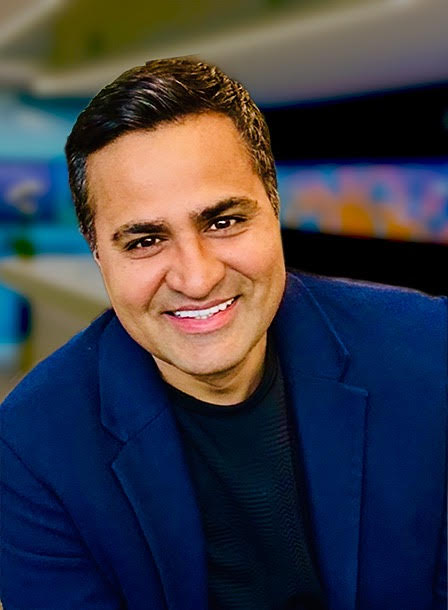


Riyaz Samnani — Founder & CEO
Licensed attorney since 2015; operator for the past 15 years. Lawma is the company Riyaz has spent his career preparing to build — an AI-native, attorney-supervised path through the courts that closes the gap between what unrepresented litigants need and what they can actually afford.
On the access-to-justice side, this is not a pivot — it's the through-line of his career. Riyaz directed the launch of Tyler Technologies' Guide & File system across LA County and 14 other states — a court SaaS application that has helped 160,000+ unrepresented litigants prepare their court forms. Lawma is that, made a consumer product. Heauthored an A2J technology reference framework with IAALS at the University of Denver and founded an OASIS technical committee setting interoperability standards for self-represented-litigant systems.
Today: SVP of Solution & Value Advisory and Forward Deployed Consulting at BlackLine — leading a 75-person global organization of advisors and centers of excellence inside a $750M-ARR public SaaS book; the team is responsible for $100M/yr+ in bookings, and is part of the leadership team architecting the go-to-market for BlackLine's Agentic AI solution. Under his leadership, average business-case ROI expanded from 1–3× to 10×+.
At SAP, led a 65-person advisory + COE team inside a $2.3B-ARR business unit that produced ~$125M/yr in new bookings. At Coupa, directly and through his team helped win ~$120M in ACV of new-business sales across 4 years (Fortune 500 customers including Disney, Mattel, Tyson). Both BlackLine's 75-person team and SAP's 65 are larger than Lawma's Y5 plan ever calls for — the operating scale is well within his comfort zone.
Potential board members
Relationships from the work that came before.
Each of the four below was supportive of an earlier iteration of the founder's access-to-justice work, and will be reapproached as Lawma stands up its board.
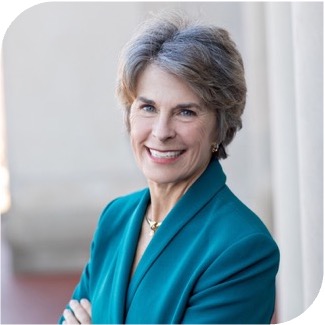
Board target — to be reconfirmed
Rebecca Love Kourlis
Former Justice, Colorado Supreme Court · Founder, IAALS
Highly influential and well-connected legal mind in the access-to-justice space. Founded IAALS (Institute for the Advancement of the American Legal System) at the University of Denver and led it through 2019; now Mediator/Arbitrator at DecisionCraft. Previously supportive of the founder's work; will reapproach.
View profile →
Board target — to be reconfirmed
Snorri Ogata
CIO, Los Angeles Superior Court
Runs technology for the largest single trial court system in the world — ~530 judicial officers, ~4,500 staff, 40 locations. Deep credibility in the court-technology space, exactly the constituency Lawma's e-filing integrations need. Previously supportive; will reapproach.
View profile →
Board target — to be reconfirmed
Leah Wilson
Former Executive Director, State Bar of California
Led the regulator for the largest U.S. attorney population through two terms (2017–2020 and 2021–2025). Critical relationship for State Bar coordination on §6155 referral-service certification and unbundled-services policy. Previously supportive; will reapproach.
View profile →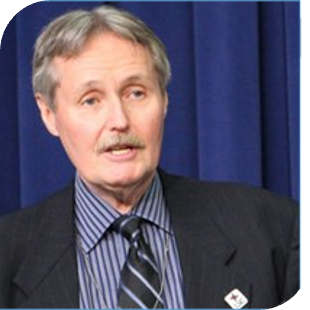
Board target — to be reconfirmed
Glenn Rawdon
Former Program Counsel for Technology, Legal Services Corporation
Ran LSC's Technology Initiative Grant program for 25 years — the federal grantmaker that funds technology to help unrepresented litigants. Retired November 2024 but remains the most-connected figure in the legal-aid + court-tech ecosystem. Previously supportive; will reapproach.
View profile →Other candidates we are considering
Thomas Clarke (Former VP of Technology, NCSC) · Marcus W. Reinkensmeyer (Arizona Supreme Court Clerk) · Alan Carlson (Former CEO, Orange County (CA) Court) · Bruce Graham (Former President, Courts & Justice Division, Tyler Technologies)
Six senior leaders, staged into the first six months post-Series A
Month 1
CTO / VP Engineering
Month 1
Head of Attorney Success
Month 2
Head of Product
Month 3
General Counsel
Month 4
VP Engineering Infrastructure
Month 6
VP Institutional Sales
Total Y1 end FTE: 86. Y5 end FTE: 159. Headcount cadence ~5–6 net hires/month — sustainable, not heroic.
The Raise · Slide 16
Capital to prove the model, scale the mission, and not a dollar more.
After the seed, the ask is about speed, not survival. Wave 1 turns a profit before we ask for the build-out round, so capital doesn't keep the lights on — it accelerates them. Every dollar funds the lawyers and GTM teams who unlock more states, and more states compound the revenue line directly. Growth is funded by proof, not by promise. Each milestone is numeric and falsifiable. If any one misses, Series A doesn't open at the modeled valuation.
Seed
$0.00M · 6 months · SoCal validation
What it buys for the mission
- Auth0 + AWS production posture live
- 5–13 pilot firms onboarded
- 500–1,250 paying engagements at ~$870 ARPU
- Legal-aid partnership letter signed
Series A
$0M · 16 months · multi-state
What it buys for the mission
- Multi-state expansion
- 25K–63K attorney network
- Y2 first profitable (Y3 at 50% S-curve; Y2 at 125%)
Series B
$0M · Build-out · Y5 Floor
What it buys for the mission
- $277M–$693M Y5 revenue (50–125% of Floor curve)
- ~~84% EBITDA margin (structural)
- 15×–39× cash multiple on total raise
Don't take our word for it. Move the sliders.
The raise ladder · what each round proves
| Phase | What's true | What it proves |
|---|---|---|
| Today | Pre-funding. Stub auth, synthetic data, $0–80/mo burn. Founder + 0.5 CFO + 1 sr atty + 2 eng = 4.5 FTE. | We built the security architecture and the privilege gate before we built the product. We're not asking you to fund the discovery. |
| After Seed ($0.86M, 6mo) | SoCal validation. Auth0 + AWS + ZDR live. Pilot firms diligencing the audit posture. Wave 1 reaches first-profitable. | Marketplace mechanics work in one geo. Wave 1 turns a profit before we ask for the build-out round. |
| After Series A ($10M, 16mo) | Multi-state rollout. ~50K attorneys on the network. Y2 first profitable; growth funded by proof. | National marketplace at scale. The unit economics survive the rollout. Capital is for speed, not survival. |
| After Series B ($30M) | Y5 Floor: $554M revenue · ~84% EBITDA · $1.27B cash · 31× on total raised. | The Floor case. Base = $925M; Upside = $1.29B. We lead with the Floor because a plan should be judged on its conservative number. |
The case, in one line
Legal representation shouldn't be a privilege. Lawma makes sure it isn't.
Most Americans can't afford a lawyer when a real civil matter shows up — and waiting for the system to fix itself stopped being a plan a long time ago. Lawma bends the cost curve in the one place it can be bent: supervised AI absorbs the work attorneys would otherwise bill hourly, and a licensed lawyer stays answerable for every output that reaches a client or a court.
The same engine that serves the priced-out majority waives the fee for legal aid & pro bono cases — the mission isn't grafted onto the company, it is the company.